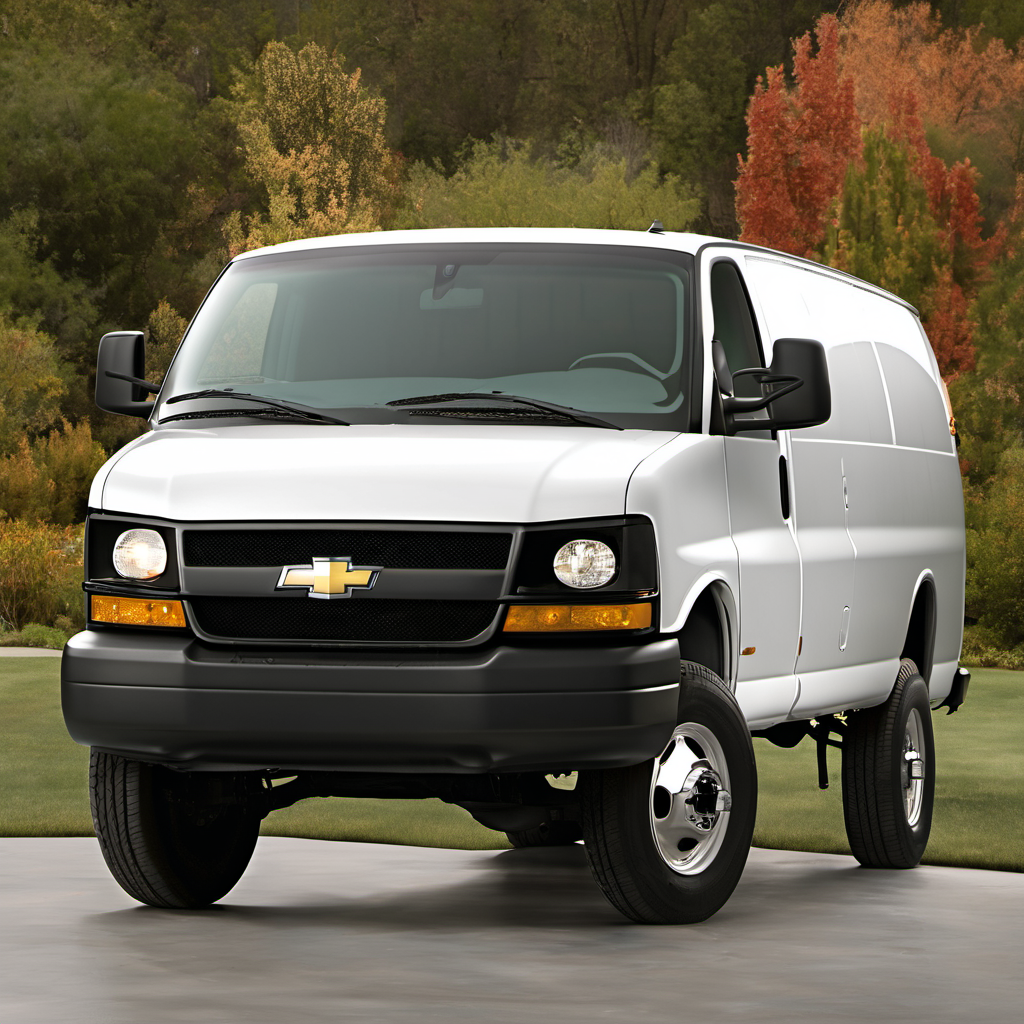
2006 Chevrolet Express 3500 Cargo Van/Minivan

2006 Chevrolet

Express 3500 CargoVan/Minivan

6.0L V8 Vortec · Van/Minivan

The 2006 Chevrolet Express 3500 is GM's heavy-duty full-size cargo van, built on the long-running GMT600 platform that traces its roots back to 1996. It is a workhorse first and foremost — purpose-built for commercial operators, tradespeople, and fleet buyers who need maximum cargo volume, a high payload rating, and the durability to rack up serious miles. The 3500 designation marks it as the heaviest-duty variant of the Express line, capable of carrying over a ton of cargo in its boxy, high-roof body. Under the hood, the standard engine in 2006 was GM's 4.8L or 6.0L Vortec V8 gasoline engine, with an optional 6.6L Duramax diesel available for buyers who prioritize torque and fuel economy under heavy loads. The 4-speed automatic transmission (4L80-E on the 3500) is robust and well-proven. The platform is conventional and straightforward to work on — a trait that keeps long-term repair costs manageable for an independent shop. These vans are known for longevity when maintained. Fleets routinely run them past 200,000 miles. The flip side is that a used example with high mileage and deferred commercial fleet maintenance can have significant wear throughout. Rust is a real concern on Wisconsin examples — pay close attention to the frame, rocker panels, and rear wheel wells.

Reliability
3/5
Verified data
Engine
6.0L V8 Vortec
Drivetrain
RWD
Fuel
Gasoline
MPG
13 city / 17 hwy / 14 combined
Seats
2
Doors
4
Body
Van
MSRP
$27,920

Overview

AI-curated

The 2006 Chevrolet Express 3500 is GM's heavy-duty full-size cargo van, built on the long-running GMT600 platform that traces its roots back to 1996. It is a workhorse first and foremost — purpose-built for commercial operators, tradespeople, and fleet buyers who need maximum cargo volume, a high payload rating, and the durability to rack up serious miles. The 3500 designation marks it as the heaviest-duty variant of the Express line, capable of carrying over a ton of cargo in its boxy, high-roof body. Under the hood, the standard engine in 2006 was GM's 4.8L or 6.0L Vortec V8 gasoline engine, with an optional 6.6L Duramax diesel available for buyers who prioritize torque and fuel economy under heavy loads. The 4-speed automatic transmission (4L80-E on the 3500) is robust and well-proven. The platform is conventional and straightforward to work on — a trait that keeps long-term repair costs manageable for an independent shop. These vans are known for longevity when maintained. Fleets routinely run them past 200,000 miles. The flip side is that a used example with high mileage and deferred commercial fleet maintenance can have significant wear throughout. Rust is a real concern on Wisconsin examples — pay close attention to the frame, rocker panels, and rear wheel wells.

Known for
  • Best-in-class cargo volume among full-size vans of its era
  • Proven Vortec V8 and Duramax diesel powertrain options
  • Heavy payload capacity — GVWR up to 9,900 lbs on the 3500
  • Simple, repairable body-on-frame construction
  • Long service life in fleet and commercial use
Best for
  • Tradespeople needing maximum cargo hauling capacity
  • Small business owners and contractors
  • Conversion van builds (shuttle, camper, mobile workshop)
  • Fleet operators prioritizing low per-mile operating cost
  • Buyers who want a proven, repairable work vehicle
Watch for
  • Heavy rust on frame, rocker panels, and wheel wells — endemic on Midwest examples
  • Deferred maintenance common on ex-fleet units
  • Fuel economy is poor regardless of engine choice — budget accordingly
  • Older safety standards — no stability control, limited airbags
  • High-mileage examples may have significant drivetrain wear hidden by recent cosmetic cleanup

Common issues by mileage

6 known

Frame and rocker panel rust

high
Typically appears
Any mileage on Midwest/salt-belt examples
Estimated repair
$500 – $4,000

Intake manifold gasket failure (6.0L Vortec)

medium
Typically appears
80–150k mi
Estimated repair
$400 – $900

Fuel pressure regulator / injector issues causing rough idle or hard start

medium
Typically appears
100–180k mi
Estimated repair
$200 – $700

4L80-E transmission wear / harsh shifting

medium
Typically appears
120–200k mi
Estimated repair
$1,500 – $3,500

ABS / brake control module faults (wheel speed sensors corrode from road salt)

high
Typically appears
60–150k mi
Estimated repair
$150 – $600

HVAC blower motor resistor failure

high
Typically appears
60–120k mi
Estimated repair
$80 – $200

Maintenance schedule

  1. 1
    Every 5,000 miles or 6 months (use conventional 5W-30 unless diesel-equipped) Engine oil and filter change

    The Vortec 6.0L responds well to regular oil changes; sludge from extended intervals accelerates lifter and camshaft wear on high-mileage examples.

  2. 2
    Every 30,000 miles, or immediately if fluid is dark or smells burned Transmission fluid and filter service (4L80-E)

    The 4L80-E is tough but works hard in cargo service. Fresh fluid is the single best thing you can do for transmission longevity.

  3. 3
    Every 5 years / 60,000 miles Coolant flush and thermostat inspection

    Degraded coolant accelerates intake manifold gasket failure on the Vortec V8 — a pattern well-documented on this engine family.

  4. 4
    Every 2 years Brake fluid flush

    Moisture-laden brake fluid accelerates corrosion in ABS modulators and calipers — a serious concern given Wisconsin road salt exposure.

  5. 5
    Every fall before salt season Full undercarriage inspection and rust treatment

    Frame rust is the number-one killer of Express vans in the Midwest. Annual inspection and treatment with rust inhibitor on bare metal can add years of service life.

  6. 6
    Every 60,000 miles (standard plugs) or 100,000 miles (if factory iridium equipped) Spark plugs and plug wires

    Fouled or worn plugs cause misfires that stress the catalytic converters and worsen already modest fuel economy.

  7. 7
    Every fall, before Wisconsin winter Battery load test

    The large Vortec V8 demands strong cranking power in sub-zero temps. A battery that passes a basic voltage test in summer can fail a cold-crank test in January.

  8. 8
    Every 30,000–50,000 miles, or after sustained heavy-load use Rear differential fluid change

    The 3500's rear axle carries heavy loads regularly; fresh fluid prevents premature bearing and gear wear.

Always defer to the manufacturer's service manual for warranty-mandated intervals.

Cost of ownership

Annual maintenance
$800 – $2,000
Fuel
At ~14 MPG combined and 15,000 miles/year, expect roughly $2,800–$3,500/year in fuel at current Midwest prices. Diesel-equipped examples fare better under heavy loads.
Insurance
Commercial cargo van rates vary widely by use type and cargo value. Expect $1,200–$2,400/year for typical small-business use in Wisconsin.

Day-to-day mechanical costs are reasonable if maintenance is kept current — the Vortec V8 and 4L80-E are not exotic. The budget risk comes from deferred fleet maintenance, rust remediation, and the van's appetite for fuel. Budget a rust inspection and brake service in year one if buying used.

Seasonal care

Lake Geneva, WI
Winter
  • Load-test the battery every fall — the big V8 needs strong cold-crank amperage when temps drop below 0°F in Lake Geneva.
  • Switch to a full-synthetic or 5W-30 conventional oil rated for low-temperature starts to reduce wear on cold mornings.
  • Flush and refill washer fluid reservoir with -20°F or colder rated fluid before first freeze; the large windshield area means you'll use a lot of it.
  • Inspect and treat all undercarriage surfaces, frame rails, and rocker panels with rust inhibitor before salt season begins — this is the single highest-ROI maintenance act on a Midwest Express van.
  • Check antifreeze concentration with a tester; target protection to at least -34°F for Wisconsin winters.
  • Inspect wiper blades and replace with winter-rated blades; the tall windshield is prone to streaking with worn rubber in freezing rain.
Summer
  • Check tire pressure monthly — cargo vans often run at or near max load rating, and heat expands pressure unpredictably; verify against the door-jamb placard under load.
  • Inspect the A/C system for refrigerant leaks and verify the cabin blower operates on all speeds (blower resistors fail commonly on this platform).
  • Check coolant level and watch for any sign of white steam or sweet smell from the engine bay — the intake manifold gasket is a known weak point and heat accelerates failure.
  • Inspect the roof and cargo area seals; the van body develops leaks around roof vents and door seals that allow heat and moisture into the cargo area.

Comparable vehicles

2006 Ford
E-350 Cargo Van

Direct competitor in the heavy-duty full-size cargo segment; shares similar payload ratings, V8 engine options, and fleet-proven durability. Often available at similar used prices.

No catalog match

2006 Dodge Sprinter 2500 Cargo
2006 Dodge
Sprinter 2500 Cargo

Offers a diesel engine standard, superior fuel economy, and a taller interior — a strong alternative for high-mileage commercial routes, though parts and service are more specialized.
2006 GMC Savana 3500 Cargo
2006 GMC
Savana 3500 Cargo

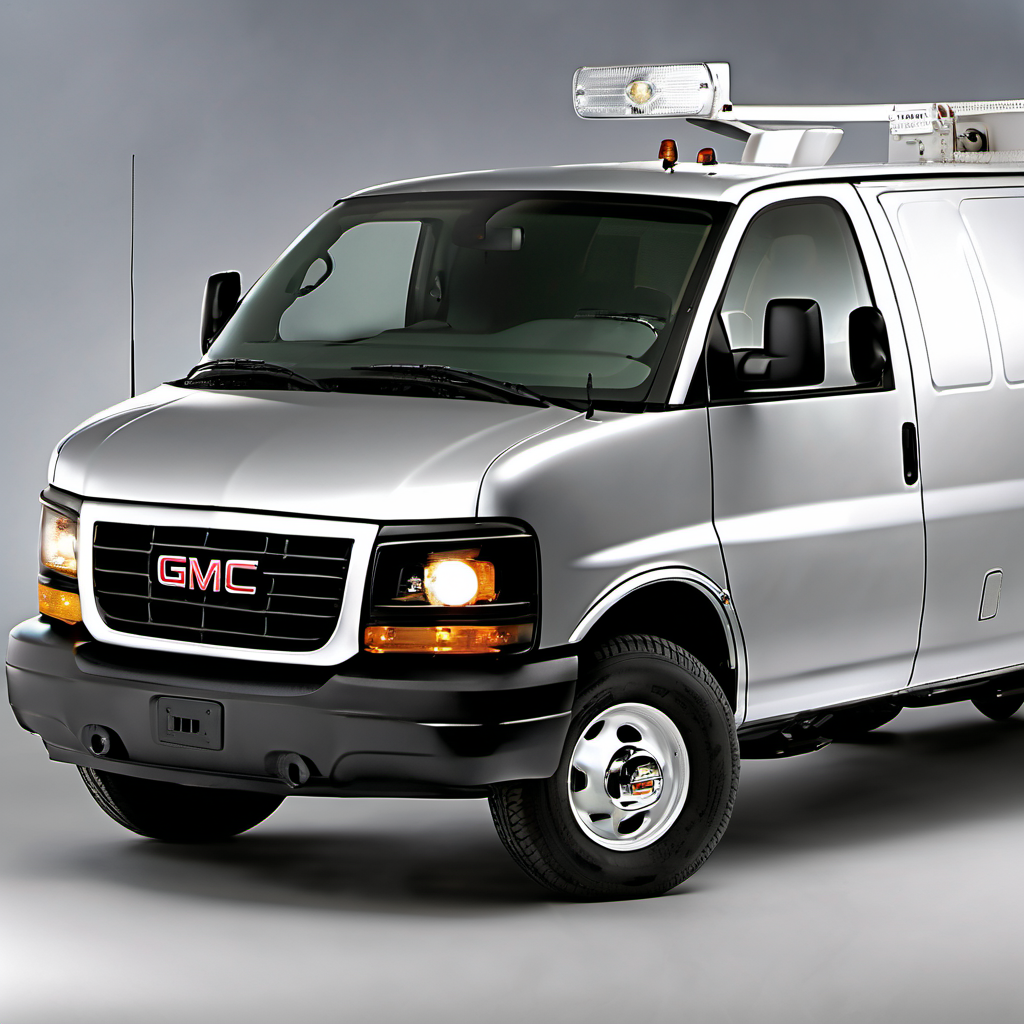
Mechanically identical to the Express 3500 — same engine, transmission, and chassis. Trim and badge differences only; a Savana is a direct swap for buyers indifferent to the nameplate.

2006 Ford
E-350 Super Duty Cutaway

If the use case involves a box body or specialty upfit, the E-350 cutaway competes directly with the Express 3500 cutaway variants at similar price and payload levels.

No catalog match

If you're shopping for one

Red flags
  • Any flex or soft spots when pushing on the rocker panels or lower body — structural rust is a disqualifier
  • Frame rust that has progressed to scale or perforation, particularly near the rear axle mounting points
  • Transmission slipping, delayed engagement, or flare between gears — rebuild cost starts at $1,500
  • Unknown or missing service history on a high-mileage example — assume worst-case deferred maintenance
  • Oil that looks milky or coolant that looks oily — points to a head gasket or intake manifold failure already in progress
  • ABS or traction control warning lights that stay on — investigate before purchase, not after
What to inspect
  • Frame rails, front crossmember, and rear spring perches — probe with a screwdriver for rust perforation, not just surface scale
  • Rocker panels and lower rear wheel wells — these rust from the inside out on Wisconsin vans and can look solid until you press on them
  • Transmission fluid condition and shift quality under load (the 4L80-E should shift firmly and cleanly)
  • ABS and brake warning lights — wheel speed sensor wiring corrodes badly on salt-belt examples
  • Intake manifold area for coolant seepage or white residue (manifold gasket failure on the 6.0L)
  • All four corners of the cargo floor for water intrusion staining (roof and door seal leaks)
  • Battery load test result and date of last replacement
  • Blower motor function on all fan speeds (resistor failure is common)
AI profile generated 3 days ago · claude-sonnet-4-6 · v2.