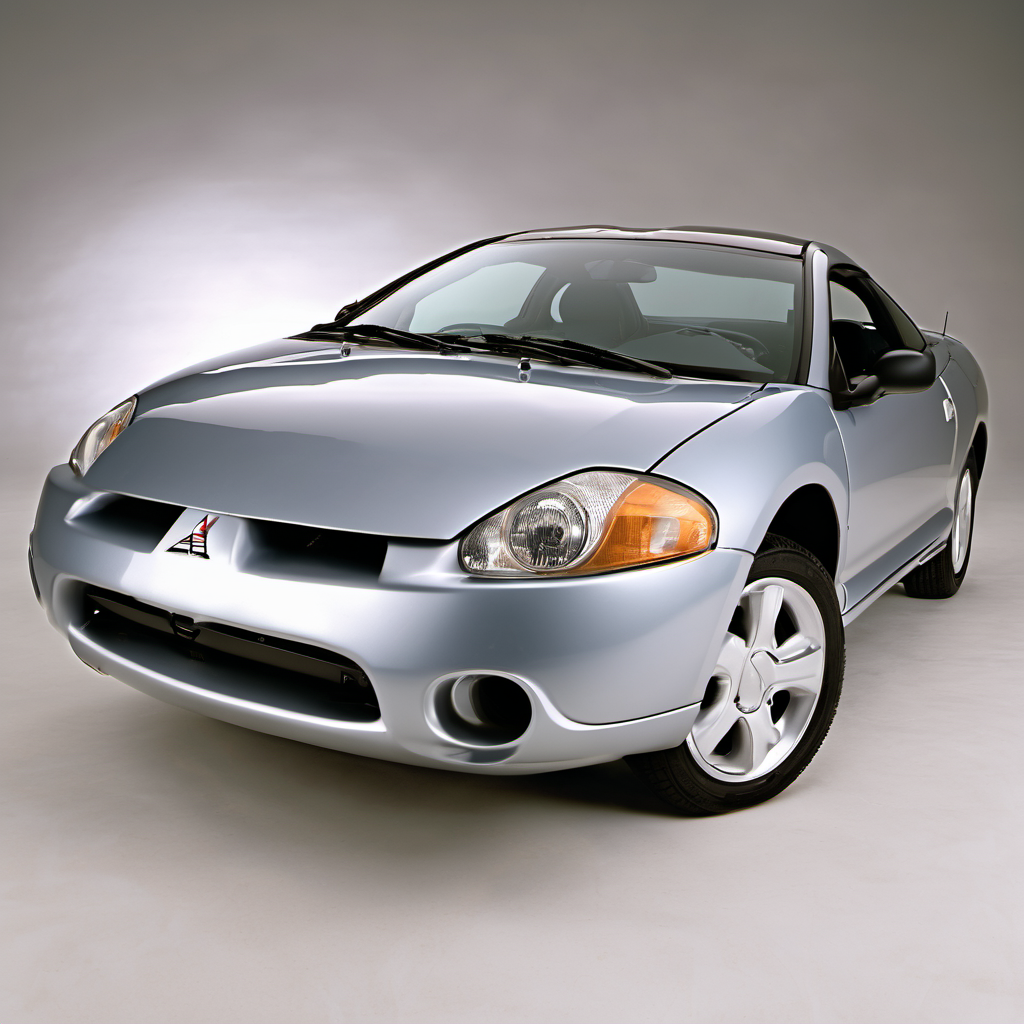
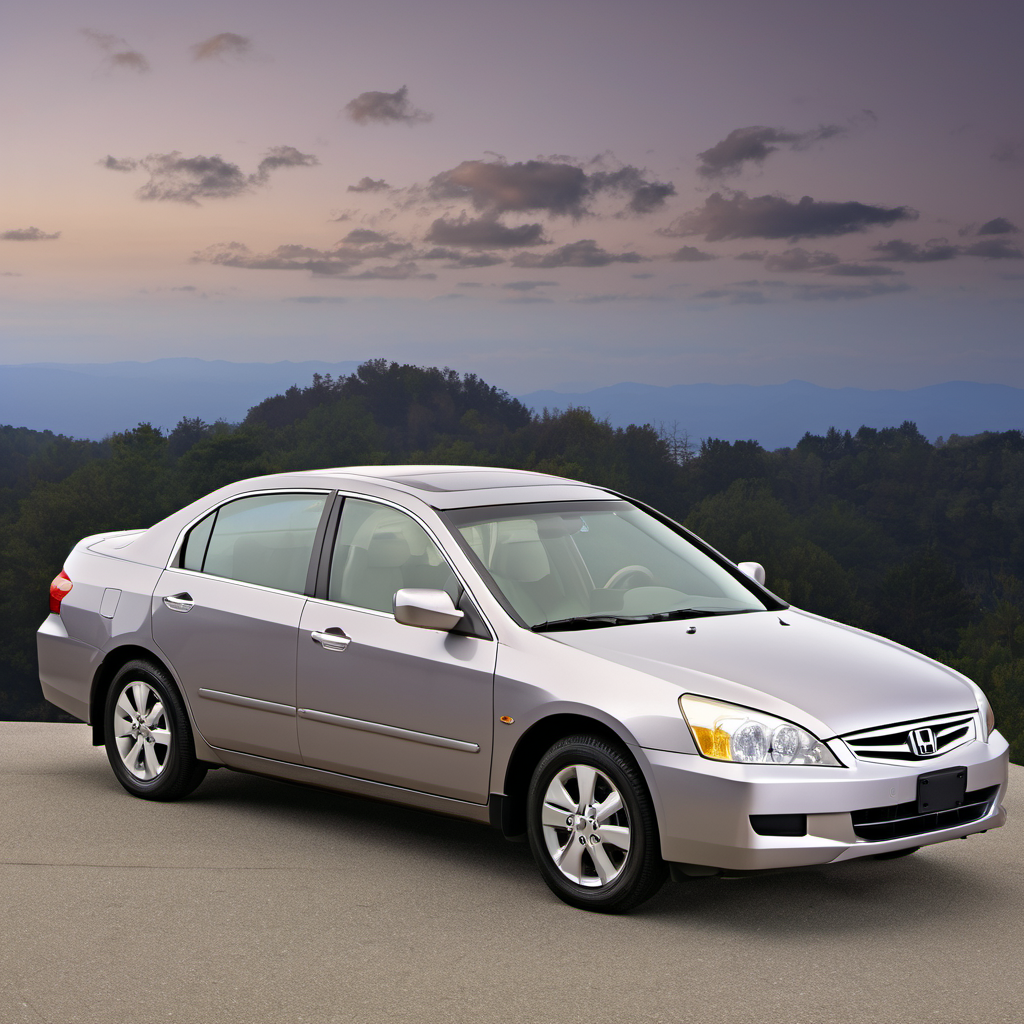
2005 Mitsubishi Eclipse Coupe

2005 Mitsubishi

EclipseCoupe

Coupe

The 2005 Mitsubishi Eclipse is the third-generation model in its final year before the heavily redesigned fourth generation arrived for 2006. This Eclipse is a front-wheel-drive sport coupe powered by a 2.4L SOHC four-cylinder — a departure from the turbocharged, AWD roots that made the earlier Eclipses famous, but a more practical and affordable daily driver. It offers a low-slung, sporty profile with decent fuel economy for its era. By 2005 the Eclipse had settled into a niche as an entry-level sport coupe with more style than substance. It isn't particularly fast, but it's reasonably reliable when maintained, and parts availability is still adequate through aftermarket channels. The third-gen platform (2000–2005) has a loyal following and a mature supply of used components. At 20 years old now, most surviving examples have seen considerable use, and deferred maintenance is common. Buying one in the Lake Geneva area means expecting a car that has lived through Wisconsin winters — check the undercarriage carefully for rust, which is the single biggest threat to longevity on these cars.

Reliability
3/5
Verified data
Specs shown for Eclipse Spyder — the most common configuration. Other trims may vary in engine, drivetrain, or fuel economy. Sign in to see your vehicle's exact specs.
Engine
[object Object]
Drivetrain
FWD
Fuel
Gasoline
MPG
20 city / 28 hwy / 23 combined
Seats
Doors
Body
Minicompact Cars

Overview

AI-curated

The 2005 Mitsubishi Eclipse is the third-generation model in its final year before the heavily redesigned fourth generation arrived for 2006. This Eclipse is a front-wheel-drive sport coupe powered by a 2.4L SOHC four-cylinder — a departure from the turbocharged, AWD roots that made the earlier Eclipses famous, but a more practical and affordable daily driver. It offers a low-slung, sporty profile with decent fuel economy for its era. By 2005 the Eclipse had settled into a niche as an entry-level sport coupe with more style than substance. It isn't particularly fast, but it's reasonably reliable when maintained, and parts availability is still adequate through aftermarket channels. The third-gen platform (2000–2005) has a loyal following and a mature supply of used components. At 20 years old now, most surviving examples have seen considerable use, and deferred maintenance is common. Buying one in the Lake Geneva area means expecting a car that has lived through Wisconsin winters — check the undercarriage carefully for rust, which is the single biggest threat to longevity on these cars.

Known for
  • Stylish, low-slung coupe silhouette
  • Reasonable fuel economy for a sport coupe
  • Easy DIY maintenance on the 2.4L four-cylinder
  • Strong aftermarket and enthusiast community support
Best for
  • Budget-minded drivers who want a sporty-looking daily commuter
  • DIY mechanics comfortable with a mature, well-documented platform
  • Drivers who prioritize style over outright performance
Watch for
  • Significant undercarriage and rocker panel rust on Midwest/Wisconsin cars
  • High-mileage timing belt neglect — this engine is interference-type
  • Aging automatic transmission prone to slipping on neglected examples
  • Sunroof and T-top seal leaks leading to interior water damage and mold
  • Electrical gremlins from aging wiring harnesses and corroded connectors

Common issues by mileage

6 known

Timing Belt Failure (Interference Engine)

high
Typically appears
60–105k mi
Estimated repair
$400 – $700

Automatic Transmission Slipping / Delayed Engagement

medium
Typically appears
80–150k mi
Estimated repair
$1,200 – $3,000

Power Window Regulator Failure

high
Typically appears
60–120k mi
Estimated repair
$150 – $350

Oxygen Sensor Failure (Bank 1)

medium
Typically appears
80–130k mi
Estimated repair
$150 – $300

Sunroof / T-Top Seal Leaks and Water Intrusion

high
Typically appears
Any mileage on aging seals
Estimated repair
$100 – $600

Undercarriage and Rocker Panel Rust

high
Typically appears
Any — age-driven on Midwest cars
Estimated repair
$500 – $3,500

Maintenance schedule

  1. 1
    Every 60,000 miles or 60 months — do not exceed Timing Belt & Water Pump Replacement

    The 2.4L SOHC is an interference engine. A snapped timing belt means bent valves and a destroyed engine. At this vehicle's age, if the service history is unknown, replace it immediately regardless of mileage.

  2. 2
    Every 30,000 miles using Mitsubishi-spec SP-III or equivalent Automatic Transmission Fluid Change

    These transmissions run hot and degrade fluid quickly. Using the wrong fluid or skipping changes accelerates clutch pack wear. Dark or burnt-smelling fluid is a red flag.

  3. 3
    Every 30,000 miles Spark Plug Replacement

    The 2.4L four-cylinder uses conventional platinum-tipped plugs. Worn plugs cause rough idle, reduced fuel economy, and can stress ignition coils.

  4. 4
    Every 2 years / 30,000 miles Coolant System Flush

    Mitsubishi's cooling systems are sensitive to degraded coolant. Low pH coolant corrodes the aluminum head and water pump housing — critical given the timing belt / water pump relationship.

  5. 5
    Every spring and fall Inspect and Lubricate Sunroof / T-Top Seals and Drain Tubes

    Clogged drain tubes and cracked seals funnel water into the cabin, soaking carpets and causing mold and electrical corrosion. Prevention is far cheaper than remediation.

  6. 6
    Every fall before salt season Undercarriage Rust Inspection and Treatment

    Wisconsin road salt aggressively attacks the Eclipse's unibody. Inspect brake lines, fuel lines, subframe mounts, and rocker seams. Apply rust inhibitor to bare metal annually.

  7. 7
    Every 2 years Brake Fluid Flush

    Hygroscopic brake fluid absorbs moisture over time, lowering boiling point. Especially important after Wisconsin winters where moisture intrusion is elevated.

  8. 8
    Every 40,000 miles or at each timing belt service Serpentine Belt and Tensioner Inspection

    At this age, rubber components crack and tensioners weaken. A failed serpentine belt takes the charging and cooling systems with it.

Always defer to the manufacturer's service manual for warranty-mandated intervals.

Cost of ownership

Annual maintenance
$600 – $1,400
Fuel
At 23 mpg combined and typical Wisconsin driving, expect roughly $1,600–$2,100/year at current mid-grade prices depending on mileage.
Insurance
Typically low — sport coupe classification but modest horsepower and age keep premiums reasonable. Expect $800–$1,400/year for a clean-record adult driver in the Lake Geneva area.

A well-maintained 2005 Eclipse is inexpensive to insure and fuel. Routine maintenance costs are modest if you stay on schedule. The financial danger zone is deferred maintenance — a neglected timing belt or ignored transmission service can turn a $3,000 car into a parts car overnight. Budget for the unexpected on any example over 100k miles.
Seasonal care

Lake Geneva, WI
Winter
  • Switch to a 5W-30 or 0W-30 full synthetic oil before temperatures drop below 0°F — the 2.4L takes time to build oil pressure on cold starts, and thick conventional oil makes it worse.
  • Test the battery every fall. The stock battery location in the engine bay is exposed; a weak battery that starts the car in October will likely fail in January.
  • Use -40°F rated washer fluid and replace wiper blades with winter-rated blades before the first freeze. The low windshield angle on the Eclipse ices up quickly.
  • Inspect brake lines and fuel lines each fall for rust pinholes — salt accelerates corrosion on these vulnerable steel lines.
  • If the car has T-tops, ensure drain tubes are clear before snow season. Snow melt finds every crack in an aging seal.
  • Keep the fuel tank at least half full to reduce condensation in the tank and prevent fuel line freeze in extreme cold.
Summer
  • Check tire pressure monthly — for every 10°F rise in temperature, tires gain roughly 1 PSI. The Eclipse's low-profile sport tires are sensitive to over-inflation and uneven wear.
  • Inspect the A/C system for refrigerant charge and cabin filter condition before hot weather. These systems are 20 years old and R-134a leaks are common at aging O-rings.
  • Monitor coolant temperature closely during slow traffic in summer heat — a marginal thermostat or partially blocked radiator that passes in spring can cause overheating in July.
  • Inspect the serpentine belt for cracking in summer heat; heat cycles accelerate rubber degradation on aging belts.

Comparable vehicles

If you're shopping for one

Red flags
  • No timing belt service record on any example over 60k miles — walk away or demand a steep discount
  • Burnt or dark brown automatic transmission fluid — likely means the transmission is already damaged
  • Any rust visible on the rocker panels or floor pans — structural rust on a unibody coupe is a deal-breaker
  • Musty or mildewy interior smell — indicates long-term water intrusion, often from T-top or sunroof drain failure
  • Check engine light with camshaft timing codes (P0012, P0015) — could indicate sludge, VVT solenoid failure, or a jumped timing belt
What to inspect
  • Timing belt service record — if unknown or overdue, price this into your offer immediately
  • Rocker panels, front subframe, and rear suspension mounting points for rust-through (get it on a lift)
  • Automatic transmission: test for smooth 1-2-3 upshifts, no shudder, no delayed engagement from a cold start
  • Sunroof or T-top seals and drain operation — smell the carpet for must or mildew
  • Undercarriage brake and fuel lines for rust bubbling or pinholes
  • All power windows and locks — regulators are a known failure and repairs add up quickly
  • Compression test or leak-down test on the 2.4L if mileage is over 120k and history is unclear
AI profile generated 3 days ago · claude-sonnet-4-6 · v2.