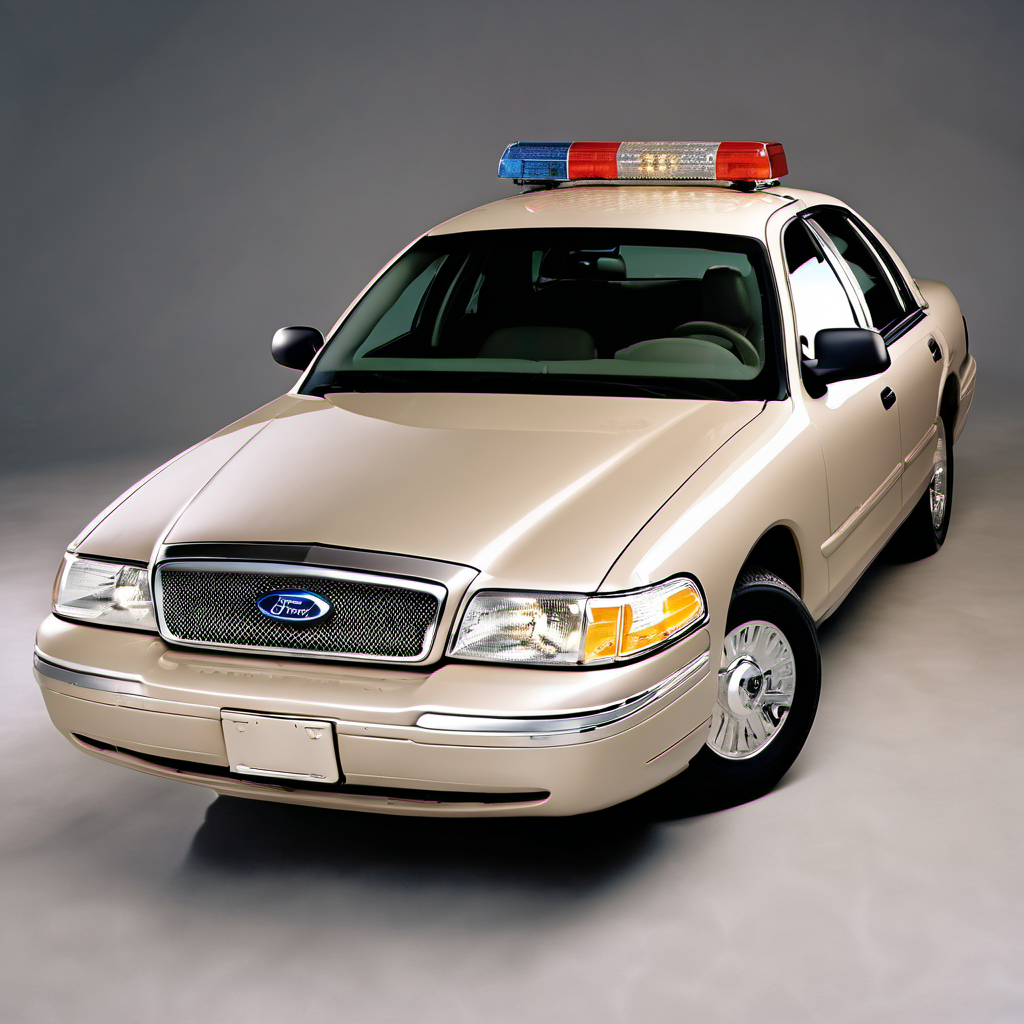
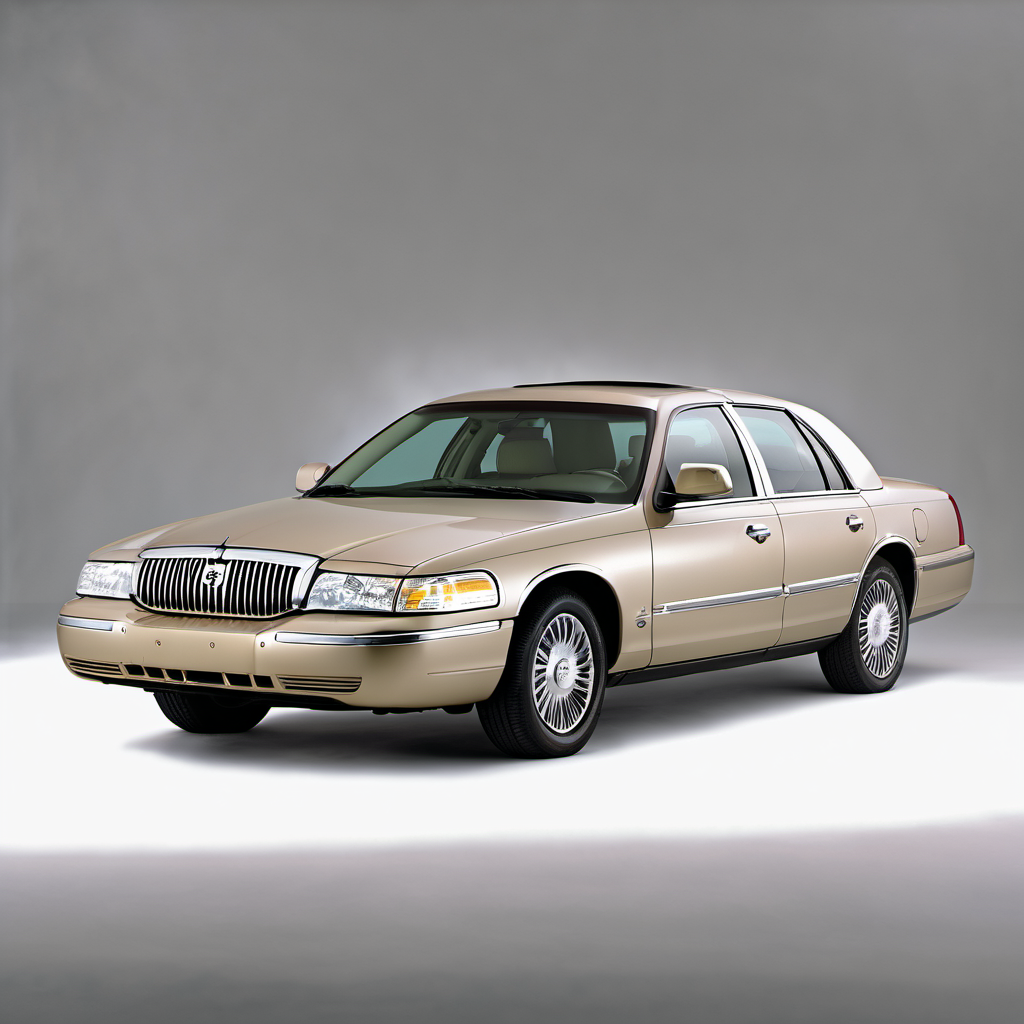
2003 Ford Crown Victoria Sedan

2003 Ford

Crown VictoriaSedan

Sedan

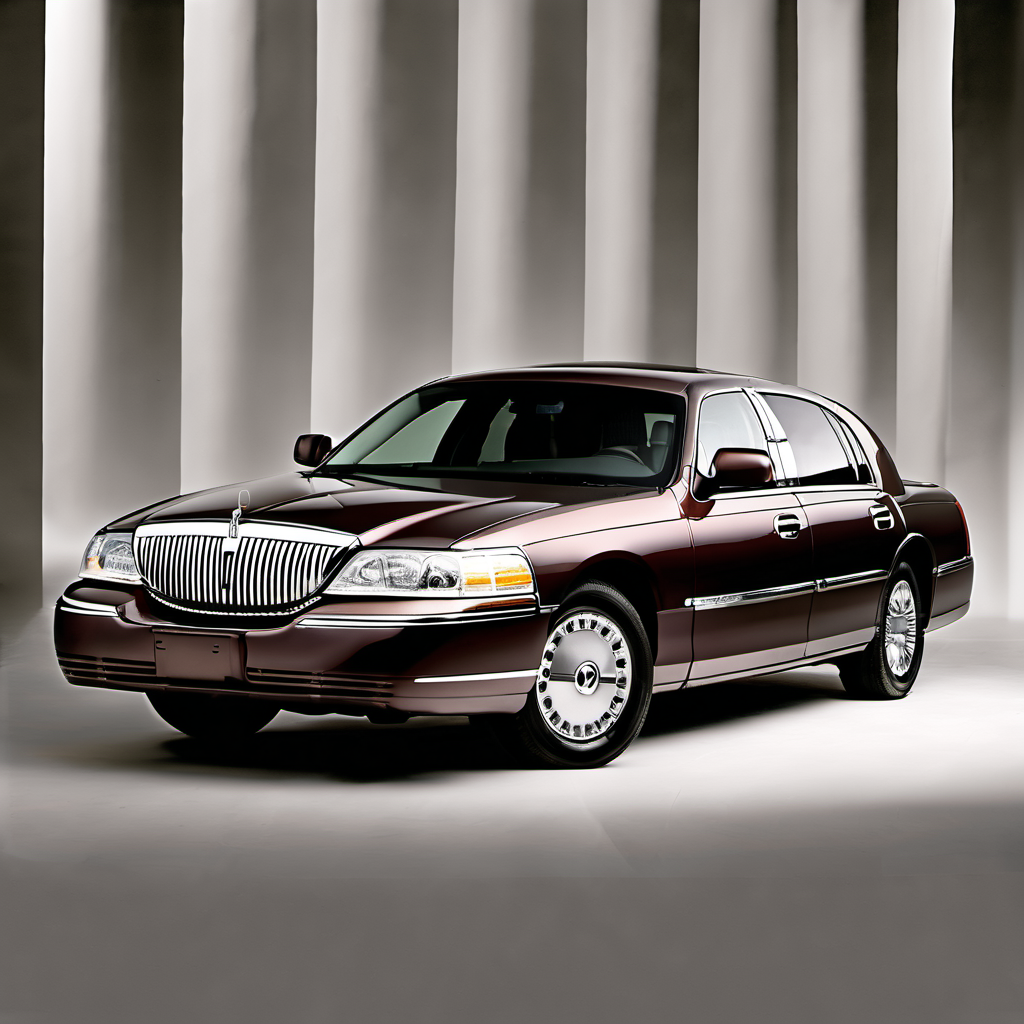
The 2003 Ford Crown Victoria is a full-size, body-on-frame rear-wheel-drive sedan built on Ford's Panther platform — the same bones shared with the Mercury Grand Marquis and Lincoln Town Car. By 2003 this platform was a mature, well-understood design that had been in continuous production since 1979 in various forms. Its reputation was built largely on fleet duty: police interceptors and taxi cabs routinely ran these cars past 200,000 miles with minimal drama. Under the hood sits Ford's 4.6L modular V8 — a two-valve SOHC unit producing 224 horsepower in civilian trim. It's paired with Ford's 4R75W four-speed automatic, a transmission with an excellent reliability track record when serviced regularly. Rear-wheel drive, a live rear axle, and a long wheelbase give the Crown Vic a ride quality that's hard to match at any price point. For a private buyer in 2003, this car was often considered unglamorous — the car your parents or grandparents drove. Two decades later it's earned genuine appreciation as a nearly bullet-proof daily driver that's simple to work on, has plentiful cheap parts, and can absorb high mileage without flinching. The main cautions are its thirst for fuel and the rust exposure that older examples face in Wisconsin winters.

Reliability
4/5
Verified data
Specs shown for Crown Victoria — the most common configuration. Other trims may vary in engine, drivetrain, or fuel economy. Sign in to see your vehicle's exact specs.
Engine
[object Object]
Drivetrain
RWD
Fuel
Gasoline
MPG
16 city / 23 hwy / 18 combined
Seats
Doors
Body
Large Cars

Overview

AI-curated

The 2003 Ford Crown Victoria is a full-size, body-on-frame rear-wheel-drive sedan built on Ford's Panther platform — the same bones shared with the Mercury Grand Marquis and Lincoln Town Car. By 2003 this platform was a mature, well-understood design that had been in continuous production since 1979 in various forms. Its reputation was built largely on fleet duty: police interceptors and taxi cabs routinely ran these cars past 200,000 miles with minimal drama. Under the hood sits Ford's 4.6L modular V8 — a two-valve SOHC unit producing 224 horsepower in civilian trim. It's paired with Ford's 4R75W four-speed automatic, a transmission with an excellent reliability track record when serviced regularly. Rear-wheel drive, a live rear axle, and a long wheelbase give the Crown Vic a ride quality that's hard to match at any price point. For a private buyer in 2003, this car was often considered unglamorous — the car your parents or grandparents drove. Two decades later it's earned genuine appreciation as a nearly bullet-proof daily driver that's simple to work on, has plentiful cheap parts, and can absorb high mileage without flinching. The main cautions are its thirst for fuel and the rust exposure that older examples face in Wisconsin winters.

Known for
  • Exceptional long-term durability; fleet use routinely exceeds 200k miles
  • Smooth highway ride thanks to body-on-frame construction and long wheelbase
  • Simple, accessible 4.6L V8 that mechanics of any skill level can work on
  • Enormous trunk and roomy rear seat — one of the largest sedans of its era
  • Abundant, inexpensive OEM and aftermarket parts due to fleet volume
Best for
  • High-mileage highway commuters who want V8 reliability on a budget
  • Owners comfortable maintaining an older vehicle themselves or at an independent shop
  • Anyone prioritizing ride comfort and cabin space over fuel economy
  • Buyers who want a proven platform with no electronic complexity surprises
Watch for
  • Rust — frame rails, rear subframe, and floor pans corrode badly in salt-belt states like Wisconsin
  • Fuel economy is genuinely poor; 16 city / 23 hwy is the reality
  • Many survivors were fleet or police vehicles with very hard prior lives
  • Rear air suspension (if equipped) can fail and is expensive to repair or replace
  • Coolant can leak into the intake manifold via the plastic crossover — inspect carefully

Common issues by mileage

6 known

Spark plug blowout from cylinder head

high
Typically appears
80–150k mi
Estimated repair
$200 – $600

Plastic intake manifold crossover coolant leak

high
Typically appears
70–130k mi
Estimated repair
$300 – $700

Rear air suspension failure (if equipped with air bag suspension)

medium
Typically appears
80–150k mi
Estimated repair
$300 – $900

Oxygen sensor failure / HO2S heater circuit fault

medium
Typically appears
80–160k mi
Estimated repair
$150 – $350

Throttle body / IAC carbon buildup causing rough idle

medium
Typically appears
60–120k mi
Estimated repair
$80 – $200

Frame and rear subframe rust (salt-belt specific)

high
Typically appears
any mileage, age-dependent
Estimated repair
$500 – $3,000

Maintenance schedule

  1. 1
    Every 5,000 miles or 6 months Engine oil and filter change

    The 4.6L modular V8 benefits from frequent oil changes. Many high-mileage examples that survived are ones with consistent short-interval oil service. Use the manufacturer-specified 5W-20.

  2. 2
    Every 30,000 miles Transmission fluid and filter service

    The 4R75W is durable but responds well to regular fluid changes. Many fleet vehicles skipped this and paid for it. Drop the pan, replace the filter and fluid — don't just do a flush on a high-mileage unit.

  3. 3
    Every 2 years or 30,000 miles Coolant system inspection — focus on intake manifold crossover

    The plastic intake crossover that routes coolant is a known failure point. Inspect for cracks, soft spots, and any sweetish smell under the hood. Catching this early prevents a much larger repair.

  4. 4
    Every 30,000 miles — do NOT wait for misfires Spark plug inspection and replacement

    The 4.6L two-valve heads have shallow plug threads. Plugs that are run too long seize in the head and can pull the threads out on removal (plug blowout). Replace on schedule, apply anti-seize, and torque carefully.

  5. 5
    Every 2 years or 30,000 miles Rear suspension inspection (springs, shocks, air bags if equipped)

    Coil spring models are generally trouble-free but inspect for sag. Air bag suspension models should be checked for leaks and compressor function, especially before winter when cold kills weak bags.

  6. 6
    Annually Brake inspection — rotors, pads, calipers, and brake lines

    Salt exposure corrodes brake lines from the outside. At this vehicle's age in Wisconsin, a visual inspection of steel brake lines for pitting and bubbling is as important as pad thickness.

  7. 7
    Every spring after winter season Underbody rust inspection

    Frame rails, rear subframe, and floor pans are the Crown Vic's biggest long-term vulnerability in salt-belt states. Catching rust early and treating it extends life significantly. A rotted subframe is a total-loss scenario.

  8. 8
    Every fall, before winter Battery load test

    A 4.6L V8 demands a healthy battery for cold cranking. Wisconsin winters will expose a weak battery fast. Test load capacity in September or October — don't wait for a no-start in January.

Always defer to the manufacturer's service manual for warranty-mandated intervals.

Cost of ownership

Annual maintenance
$600 – $1,400
Fuel
At 18 MPG combined and typical driving of 12,000 miles/year, expect roughly $1,800–$2,400/year in fuel at current Midwest gas prices. Highway-heavy driving improves this noticeably.
Insurance
Typically low — older full-size sedans with moderate book value are inexpensive to insure. Expect $600–$1,000/year for a clean driving record in Wisconsin.

The Crown Vic is cheap to insure and relatively cheap to maintain at an independent shop — parts are plentiful and labor time is short because the engine bay is roomy and accessible. Fuel is the biggest ongoing expense. The financial wildcard is rust: a major undercarriage repair or brake line replacement can add $1,000–$3,000 in a single year for a neglected Wisconsin example. Buy a clean one and keep up on the undercoating and rust prevention.
Seasonal care

Lake Geneva, WI
Winter
  • Load-test the battery every October — the 4.6L V8 needs strong cold-cranking amps and Wisconsin winters will kill a marginal battery quickly.
  • Switch to 5W-20 full synthetic if not already used; it flows better at sub-zero temperatures and reduces morning startup wear.
  • Inspect and treat brake lines for rust before the salt season begins — these steel lines corrode from the outside and are a safety-critical failure point on aging examples.
  • Fill the washer fluid reservoir with a rated -30°F or lower concentrate; the large windshield and long hood make visibility critical and standard fluid will freeze in the nozzles.
  • Check tire pressure monthly — pressure drops roughly 1 PSI for every 10°F drop in temperature, and underinflated tires on RWD in snow is a handling hazard.
  • The Crown Vic is RWD with a heavy front engine — keep weight in the trunk (sandbags) and consider winter tires if driving in unplowed conditions, as the factory all-seasons offer limited snow traction.
Summer
  • Check coolant concentration and inspect the plastic intake manifold crossover for cracks — heat accelerates failure of this known weak point.
  • Inspect and recharge the A/C system if cooling is marginal; the large cabin takes significant effort to cool and a weak system will struggle in July heat.
  • Monitor tire pressure as heat increases inflation — overinflated tires reduce traction and wear the center tread faster.
  • Inspect the engine cooling fan clutch for proper engagement; a slipping clutch causes heat soak in stop-and-go traffic and can push the engine toward overheating.
  • Check power steering fluid level and hose condition — heat ages rubber hoses and the rack sees more stress in summer driving.

Comparable vehicles

If you're shopping for one

Red flags
  • Any rust perforation in the frame rails or subframe — this is a structural safety issue and typically not economically repairable.
  • Soft, spongy, or bubbling steel brake lines — a brake line failure at speed is catastrophic.
  • Coolant with an oily sheen or oil with a milky appearance — points to internal coolant leak that may be expensive.
  • A prior police or taxi history with no service records — assume deferred maintenance on every wear item.
  • Mismatched or peeling paint panels suggesting accident repair that wasn't disclosed.
  • An engine that smokes heavily on cold start and doesn't clear — worn rings or valve seals on a high-mileage V8 can mean a rebuild is approaching.
What to inspect
  • Run a VIN history check and specifically look for fleet, taxi, or police use — these cars were worked hard and may have had deferred maintenance.
  • Get under the car and inspect the frame rails, rear subframe mounts, and floor pans for rust perforation — this is the single most important inspection on any Wisconsin-area Crown Vic.
  • Check all brake lines along the undercarriage for rust, bubbling, or pinhole leaks — replace any questionable sections before purchase.
  • Start the engine cold and listen for ticking from the top end that clears up — minor oil consumption or valve train noise that goes away is acceptable; persistent ticking is not.
  • Check the coolant in the overflow reservoir for an oily film or chocolate-milk appearance, which indicates a head gasket or intake crossover leak mixing coolant and oil.
  • Test the air suspension compressor (if equipped) by turning the car on and listening for it to cycle and hold — a sagging corner or constant compressor cycling means bag or compressor failure.
  • Pull the spark plugs if possible — look for any that show signs of cross-threading or thread damage, which signals previous plug blowout repair.
AI profile generated 3 days ago · claude-sonnet-4-6 · v2.