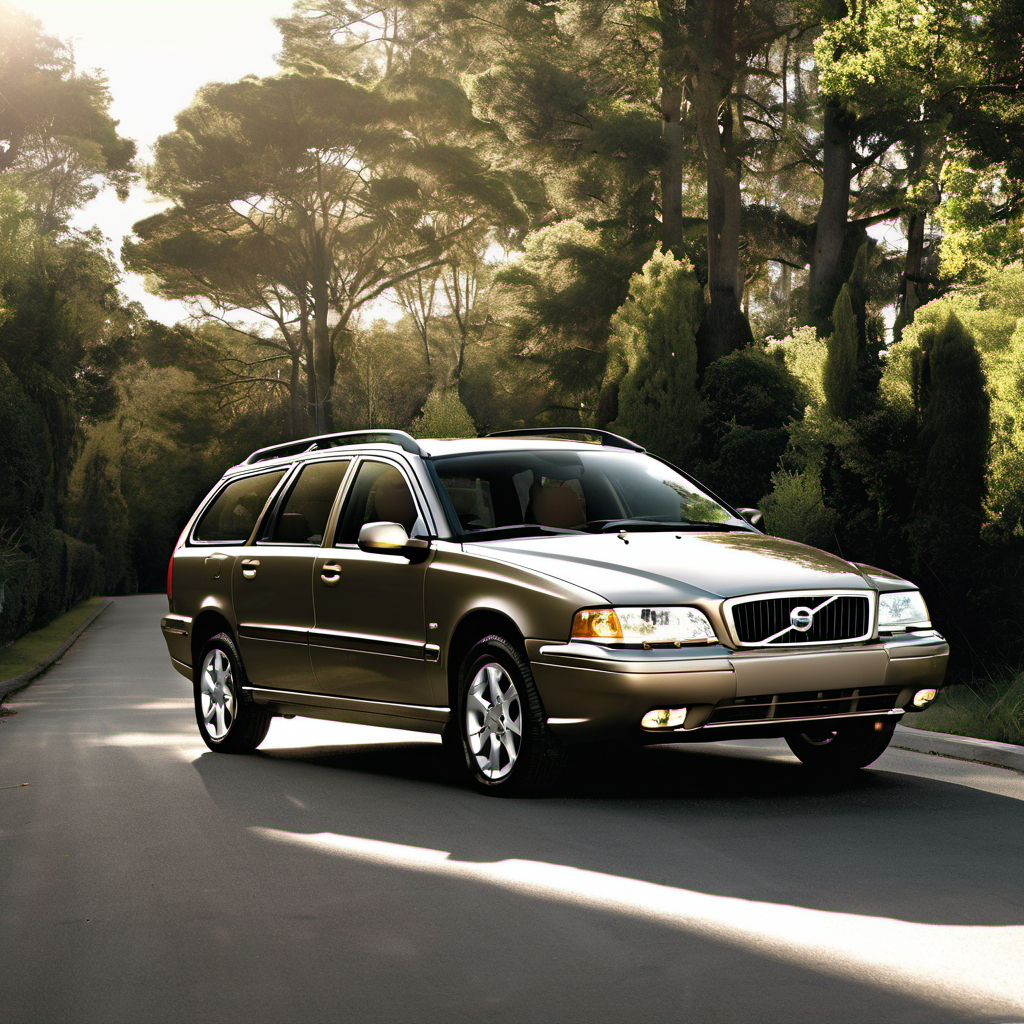
2000 Volvo V70 Wagon

2000 Volvo

V70Wagon

Wagon

The 2000 Volvo V70 is a mid-size European station wagon built around Volvo's reputation for safety, durability, and practical cargo space. Powered by a turbocharged 2.3L inline-5, it delivers enough punch for highway merging and passing while returning reasonable fuel economy for its era. By 2000 the V70 was a well-sorted second-generation design, sharing its platform with the S70 sedan and inheriting decades of Volvo wagon DNA. Owners choose the V70 for its cavernous, flat-folding cargo area, above-average crash protection, and a comfortable ride that holds up on long Wisconsin highway runs. The turbo adds performance but also adds complexity — expect to stay on top of oil changes and boost system maintenance to keep it honest. As a 25-year-old Swedish car, parts availability has narrowed and independent-shop familiarity varies. Find a mechanic with Volvo experience before buying. A well-maintained example can easily pass 200k miles; a neglected one can become an expensive project quickly.

Reliability
3/5
Verified data
Specs shown for V70 FWD — the most common configuration. Other trims may vary in engine, drivetrain, or fuel economy. Sign in to see your vehicle's exact specs.
Engine
[object Object]
Drivetrain
FWD
Fuel
Premium gasoline
MPG
17 city / 25 hwy / 20 combined
Seats
Doors
Body
Midsize Station Wagons

Overview

AI-curated

The 2000 Volvo V70 is a mid-size European station wagon built around Volvo's reputation for safety, durability, and practical cargo space. Powered by a turbocharged 2.3L inline-5, it delivers enough punch for highway merging and passing while returning reasonable fuel economy for its era. By 2000 the V70 was a well-sorted second-generation design, sharing its platform with the S70 sedan and inheriting decades of Volvo wagon DNA. Owners choose the V70 for its cavernous, flat-folding cargo area, above-average crash protection, and a comfortable ride that holds up on long Wisconsin highway runs. The turbo adds performance but also adds complexity — expect to stay on top of oil changes and boost system maintenance to keep it honest. As a 25-year-old Swedish car, parts availability has narrowed and independent-shop familiarity varies. Find a mechanic with Volvo experience before buying. A well-maintained example can easily pass 200k miles; a neglected one can become an expensive project quickly.

Known for
  • Exceptional passive safety — Volvo's hallmark
  • Roomy, practical wagon cargo area with flat fold
  • Torquey turbocharged 2.3L inline-5 engine
  • Comfortable, compliant long-distance ride
  • Strong owner loyalty among Volvo enthusiasts
Best for
  • Families needing cargo space without an SUV
  • Highway commuters who want European refinement
  • Buyers prioritizing crash safety above all else
  • DIY-inclined owners comfortable with Volvo platforms
Watch for
  • Turbo and boost system maintenance is non-negotiable
  • ETM (electronic throttle module) failure is common and costly
  • Oil sludge from extended drain intervals — check service history
  • Parts can be harder to source and pricier than domestic equivalents
  • Rear main and cam seals prone to leaking on higher-mileage examples

Common issues by mileage

6 known

Electronic Throttle Module (ETM) Failure

high
Typically appears
60–150k mi
Estimated repair
$400 – $900

Oil Sludge / Engine Internal Damage from Extended Drain Intervals

medium
Typically appears
80–200k mi
Estimated repair
$500 – $4,500

Turbo Bypass (Wastegate) Solenoid Failure

medium
Typically appears
70–130k mi
Estimated repair
$150 – $450

Oxygen Sensor / O2 Heater Circuit Failure

medium
Typically appears
80–150k mi
Estimated repair
$120 – $350

Cooling System Deterioration (thermostat, reservoir, hoses)

high
Typically appears
Any mileage on 20+ yr old example
Estimated repair
$150 – $600

Cam Seals / Rear Main Seal Oil Leaks

medium
Typically appears
100–180k mi
Estimated repair
$300 – $800

Maintenance schedule

  1. 1
    Every 5,000 miles or 6 months — do not stretch Engine oil and filter change

    The B5234 turbo engine is sludge-prone under infrequent changes. Use the correct viscosity (5W-30 full synthetic) and never exceed this interval. Oil sludge is the single most common cause of catastrophic engine damage on these cars.

  2. 2
    Every 2 years or 30,000 miles; inspect hoses and reservoir annually Coolant system inspection and flush

    The plastic coolant reservoir and thermostat housing are over 20 years old. Proactive replacement prevents roadside overheating. Use Volvo-spec coolant (OAT type) to avoid corrosion.

  3. 3
    Every 30,000 miles Transmission fluid change (automatic)

    The AW50-42 4-speed auto is durable but benefits from clean fluid. Many used V70s have never had this done — fresh fluid is cheap insurance.

  4. 4
    Every 50,000 miles or at any sign of cracking/glazing Serpentine belt and tensioner inspection

    A snapped belt on a cold Wisconsin morning leaves you stranded. The tensioner pulley bearing also wears with age.

  5. 5
    Every 30,000 miles Spark plugs (OEM platinum or iridium)

    The turbo engine demands consistent ignition quality. Worn plugs increase knock risk and stress the ignition coil packs.

  6. 6
    Inspect at purchase; clean or replace if throttle response is erratic ETM cleaning or replacement check

    The Electronic Throttle Module develops carbon buildup and internal wear. Cleaning can extend life; replacement is required when the unit fails. Confirm whether the unit has ever been addressed.

  7. 7
    Every 2 years Brake fluid flush

    Volvo brake systems are hygroscopic — moisture absorbed into old fluid lowers boiling point and can cause ABS/STC sensor corrosion over time.

  8. 8
    Every 30,000 miles Fuel filter replacement

    Restricted fuel flow stresses the pump and can cause lean conditions under turbo boost — especially notable at altitude or during hard acceleration.

Always defer to the manufacturer's service manual for warranty-mandated intervals.

Cost of ownership

Annual maintenance
$800 – $2,200
Fuel
Requires premium fuel (91 octane recommended for the turbo). At ~20 MPG combined and ~12,000 miles/year, expect $1,800–$2,400/year depending on pump prices.
Insurance
Typically moderate — expect $900–$1,400/year for a driver with clean history in southern Wisconsin. The age of the vehicle lowers comprehensive/collision value but liability remains.

Day-to-day running costs are manageable if you stay ahead of maintenance. The danger zone is deferred work: a neglected ETM, sludged engine, or blown cooling hose can turn a $2,000 car into a $5,000 repair bill quickly. Budget on the higher end of the maintenance range for any example without documented service history. Parts are more expensive than domestic equivalents, and some items require Volvo-specific tooling.
Seasonal care

Lake Geneva, WI
Winter
  • Switch to a full synthetic 5W-30 before temperatures drop — the turbo depends on quick oil flow at cold starts, which conventional oil won't deliver at -10°F.
  • Test the battery before November. Cold cranking a turbo inline-5 at sub-zero temps is hard on a weak battery; replace anything under ~500 CCA or 3+ years old.
  • Flush and refill washer fluid with a -20°F or colder rated fluid. Wisconsin road salt spray is relentless and a frozen washer system is a visibility hazard.
  • Inspect and treat undercarriage and wheel wells for road salt corrosion — these cars are 25 years old and rust is a real structural concern, not just cosmetic.
  • Use a block heater if the car sits outside. The turbo especially benefits from a warm start — it reduces oil thickening and wear on the turbo bearings.
  • Keep the fuel tank above half in deep cold to prevent fuel line moisture issues and reduce the load on the fuel pump in frigid temps.
Summer
  • Check tire pressure monthly — Wisconsin summer heat causes pressure to rise about 1 PSI per 10°F increase; overinflation reduces grip and wear life.
  • Inspect the A/C system for refrigerant level and compressor operation. The V70's A/C uses R134a; a weak charge will leave you miserable on humid Wisconsin days.
  • Monitor coolant temperature closely during stop-and-go summer traffic. The plastic reservoir and aging hoses are vulnerable to heat cycling — watch for any steam or sweet smell.
  • Check the serpentine belt condition — heat accelerates belt cracking, and a belt failure in summer heat is worse than a cold-weather breakdown.
  • Turbo heat soak after short stop-and-go trips can cook oil in the turbo bearings; allow a 1–2 minute cool-down idle before shutting off after hard driving.

Comparable vehicles

If you're shopping for one

Red flags
  • No service records or inability to verify oil change history — walk away unless price reflects the risk.
  • Sludge visible at the oil filler cap or on the dipstick.
  • Any active or recent codes related to camshaft timing (P0012, P0015) — these can indicate low oil pressure history or timing component wear.
  • Rust perforation on the frame, subframe mounting points, or brake lines — these are safety-critical and repair costs exceed most car values.
  • Blue or white exhaust smoke under boost — points to turbo seal failure or engine wear.
  • ETM warning light or erratic throttle behavior with no repair documentation.
  • Overheating history or evidence of recent coolant system repairs without explanation.
What to inspect
  • Pull the oil cap and dipstick — look for milky residue (coolant leak) or thick black sludge (neglected oil changes). Either is a serious red flag.
  • Verify the ETM has been addressed — ask for documentation. Drive it and check for erratic idle, sudden power loss, or throttle hesitation.
  • Check for boost system integrity — listen for hissing under acceleration (boost leak) and confirm the turbo spools smoothly without excessive lag or smoke.
  • Inspect the coolant reservoir for cracks and the hoses for soft spots, swelling, or residue around clamps.
  • Look at the undercarriage carefully for rust on the frame rails, subframe, and brake lines — 25 Wisconsin winters can cause serious hidden corrosion.
  • Test the ABS and STC (stability control) lights on startup — they should illuminate briefly then go off. Codes C0060–C0080 suggest ABS/chassis module faults.
  • Request a full scan for stored and pending codes before purchase — especially any P003x (turbo/O2 heater) or powertrain timing codes.
AI profile generated 4 days ago · claude-sonnet-4-6 · v2.