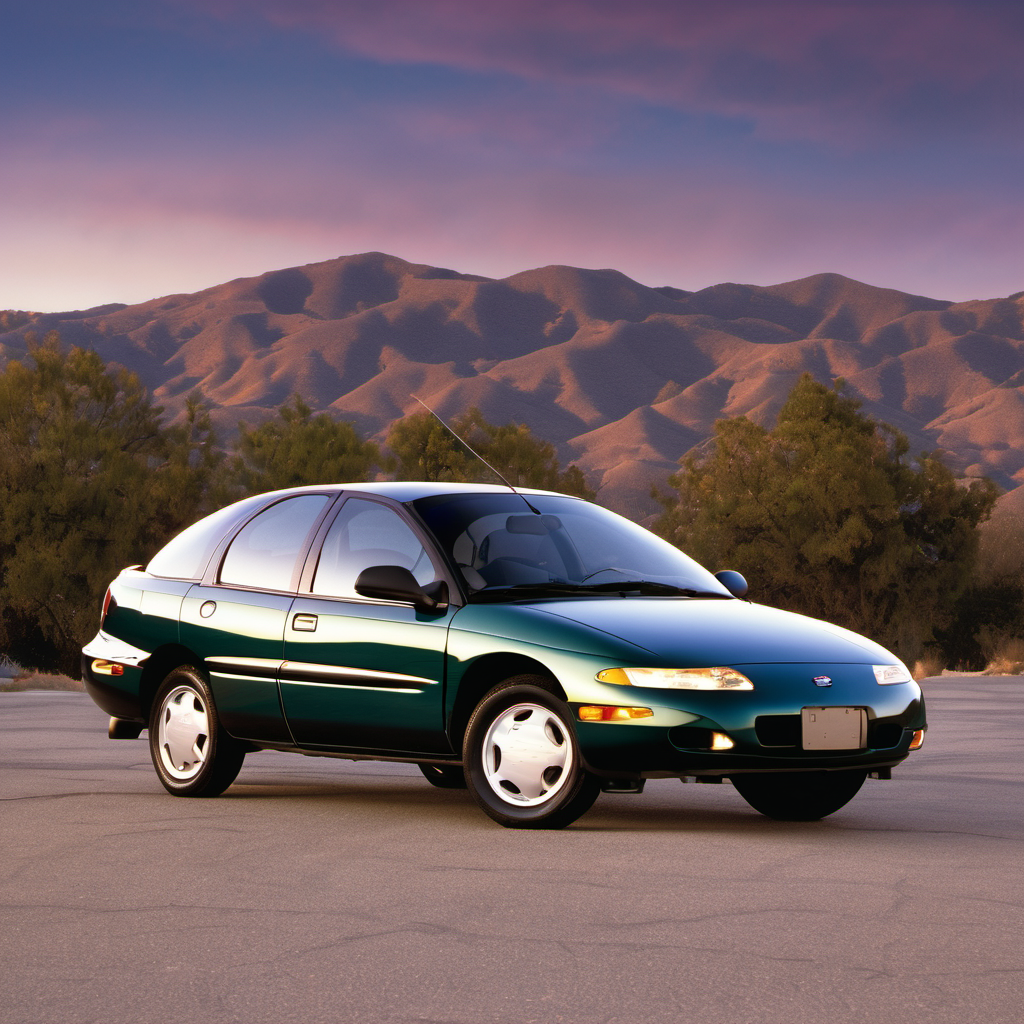
1996 Saturn S-Series Coupe

1996 Saturn

S-SeriesCoupe

1.9L DOHC I4 (SC2) / 1.9L SOHC I4 (SC1) · Coupe

The 1996 Saturn SC (S-Series Coupe) is a compact, front-wheel-drive sport coupe built at Saturn's Spring Hill, Tennessee plant. Available as the SC1 (single-cam) or SC2 (twin-cam), it was Saturn's sporty offering in the S-Series lineup — sharing its platform with the SL sedans and SW wagons. The plastic body panels that resist dents and minor dings were a genuine selling point, and the car developed a loyal following for its simplicity and reasonable running costs. By 1996 these cars were well into their stride as a known quantity. The DOHC SC2 offered a noticeable step up in performance, while the SOHC SC1 was the economy choice. Both used Saturn's all-aluminum engine block, which keeps weight down but demands consistent coolant maintenance to avoid corrosion and head gasket issues. At nearly 30 years old, any surviving example is a high-mileage, budget-tier used car. Parts availability is shrinking and Saturn as a brand no longer exists, so sourcing some components requires hunting. That said, the mechanicals are straightforward and a competent independent shop can handle virtually all service work.

Reliability
3/5
Verified data
Engine
1.9L DOHC I4 (SC2) / 1.9L SOHC I4 (SC1)
Drivetrain
FWD
Fuel
Gasoline
MPG
28 city / 38 hwy / 32 combined
Seats
4
Doors
3
Body
Coupe
MSRP
$12,495

Overview

AI-curated

The 1996 Saturn SC (S-Series Coupe) is a compact, front-wheel-drive sport coupe built at Saturn's Spring Hill, Tennessee plant. Available as the SC1 (single-cam) or SC2 (twin-cam), it was Saturn's sporty offering in the S-Series lineup — sharing its platform with the SL sedans and SW wagons. The plastic body panels that resist dents and minor dings were a genuine selling point, and the car developed a loyal following for its simplicity and reasonable running costs. By 1996 these cars were well into their stride as a known quantity. The DOHC SC2 offered a noticeable step up in performance, while the SOHC SC1 was the economy choice. Both used Saturn's all-aluminum engine block, which keeps weight down but demands consistent coolant maintenance to avoid corrosion and head gasket issues. At nearly 30 years old, any surviving example is a high-mileage, budget-tier used car. Parts availability is shrinking and Saturn as a brand no longer exists, so sourcing some components requires hunting. That said, the mechanicals are straightforward and a competent independent shop can handle virtually all service work.

Known for
  • Plastic body panels that don't rust or dent easily
  • Lightweight all-aluminum engine
  • Loyal, enthusiastic owner community
  • Simple, easy-to-work-on mechanicals
  • Competitive fuel economy for the era
Best for
  • Budget-conscious buyers who want a simple daily driver
  • DIY mechanics comfortable with older GM architecture
  • City commuters who value fuel economy over comfort
  • Owners who can do their own maintenance
Watch for
  • Head gasket failure — aluminum block is sensitive to overheating
  • Coolant system neglect leading to corrosion inside the block
  • Timing chain stretch on high-mileage examples
  • Rusted subframes and suspension components (especially in Wisconsin)
  • Declining parts availability as Saturn inventory dwindles

Common issues by mileage

6 known

Head Gasket Failure

high
Typically appears
80–150k mi
Estimated repair
$800 – $1,800

Timing Chain Stretch / Tensioner Wear

medium
Typically appears
100–180k mi
Estimated repair
$400 – $900

Coolant Leaks (Intake Manifold Gasket / Water Pump)

medium
Typically appears
90–160k mi
Estimated repair
$250 – $700

Strut and Suspension Corrosion (Wisconsin Salt Damage)

high
Typically appears
Any mileage on Midwest cars
Estimated repair
$300 – $900

Ignition Module / Coil Pack Failure

medium
Typically appears
80–150k mi
Estimated repair
$150 – $400

Maintenance schedule

  1. 1
    Every 2 years / 30k mi Coolant flush and refill with correct DEX-COOL or green antifreeze (per cap specification)

    The aluminum block corrodes rapidly with degraded or wrong-type coolant. This is the single most important maintenance item on any Saturn S-Series.

  2. 2
    Every 60k mi or at first sign of rattling on cold start Timing chain inspection

    Unlike a belt, the chain has no mandatory replacement interval, but stretch and tensioner wear show up as cold-start rattle and can cause timing issues if ignored.

  3. 3
    Every 3,000–5,000 mi with conventional oil (this era does not support extended drain intervals) Engine oil and filter change

    The DOHC engine in particular benefits from fresh oil to keep variable timing components (if equipped) and chain tensioner operating correctly.

  4. 4
    Every 30k mi Spark plugs and plug wires

    Worn plugs and cracked wires cause misfires and stress the ignition module, which is a known failure point on these cars.

  5. 5
    Every 2–3 years Brake fluid flush

    Brake fluid absorbs moisture over time, lowering the boiling point and accelerating corrosion in calipers and wheel cylinders — a real concern in Wisconsin salt country.

  6. 6
    Every 2 weeks during winter road-salt season Underbody wash

    The plastic body panels resist rust, but the steel subframe, suspension arms, brake lines, and fuel lines are all vulnerable to Wisconsin road salt. Flushing the undercarriage is cheap insurance.

  7. 7
    Every fall before winter Battery load test

    The 1.9L requires a healthy battery for cold starts. A marginal battery that passes in summer will often fail in a Lake Geneva January.

  8. 8
    Every 30k mi Air filter and PCV valve

    A clogged PCV causes crankcase pressure buildup that pushes oil past seals — a cheap fix that prevents expensive leaks.

Always defer to the manufacturer's service manual for warranty-mandated intervals.

Cost of ownership

Annual maintenance
$400 – $1,200
Fuel
Excellent — 32 MPG combined means roughly $1,400–$1,700/year at current Wisconsin gas prices for average driving. Uses regular 87 octane.
Insurance
Very low — liability-only coverage is typical for a car of this age and value. Full coverage rarely makes financial sense.

On a good year with no surprises, this is a cheap car to own. Fuel and insurance are minimal. The risk is a major repair — head gasket jobs or full suspension overhauls can easily exceed the car's market value, which is typically $1,500–$4,000 for a clean 1996 SC. Budget for the possibility that one bad repair ends the car's economic life.
Seasonal care

Lake Geneva, WI
Winter
  • Load-test the battery every October — the 1.9L aluminum engine cranks hard in sub-zero temps and a weak battery won't make it through a Lake Geneva winter
  • Switch to a 5W-30 full synthetic if running conventional oil; the thinner cold-weight helps the timing chain tensioner get oil pressure faster on frigid starts
  • Fill the washer fluid reservoir with a -20°F or colder rated fluid — the standard reservoir cap is accessible and this is a 2-minute job that matters at 5 AM
  • Install winter wiper blades; the standard blades ice up and streak badly below 20°F
  • Flush the undercarriage every 1–2 weeks during salt season — the steel brake lines and subframe are the most rust-vulnerable parts on an otherwise plastic-paneled car
  • Keep the fuel tank above half when temps drop below 10°F to reduce condensation in the fuel system
Summer
  • Watch the temperature gauge closely — the aluminum engine has zero tolerance for overheating; pull over immediately if the needle climbs toward red
  • Check coolant level and condition monthly; heat accelerates coolant breakdown and this is already the car's biggest weak point
  • Check tire pressure after the first hot week — every 10°F rise in ambient temp adds about 1 PSI, which can push an already over-inflated tire into the danger zone
  • Run the A/C on a short test drive in May before you need it; recharging or repairing a 28-year-old A/C system can be expensive due to parts availability

Comparable vehicles

If you're shopping for one

Red flags
  • Any sign of overheating in the vehicle's history — one overheat event can warp the aluminum head and make head gasket failure inevitable
  • White smoke from the exhaust on a warm engine (coolant burning = head gasket already gone)
  • Milky or foamy oil on the dipstick or under the oil cap
  • A fresh coolant flush with no other service records — sometimes done to mask a problem right before sale
  • Rust or perforation on the subframe, floor pans, or brake lines — the plastic panels hide nothing, but look underneath
  • No maintenance records whatsoever on a car this old — walk away unless the price reflects a parts-only vehicle
What to inspect
  • Coolant condition — pull the cap cold and look for brown sludge, oil sheen, or a sweet burnt smell indicating head gasket seepage
  • Thermostat housing and hose connections for seeping coolant stains (dried white or orange residue)
  • Timing chain rattle — start cold and listen for a diesel-like ticking or rattling in the first 10 seconds
  • Undercarriage: brake lines, fuel lines, and subframe for salt corrosion — poke steel lines gently; flaking or pitting is a safety concern
  • Check the CV axle boots for cracks or grease fling marks on the inside of the wheel well
  • Sit in the driver seat and check that all gauges read correctly on startup, especially the temperature gauge (a missing temp reading often means a failed sensor hiding an overheating problem)
AI profile generated 27 days ago · claude-sonnet-4-6 · v2.